
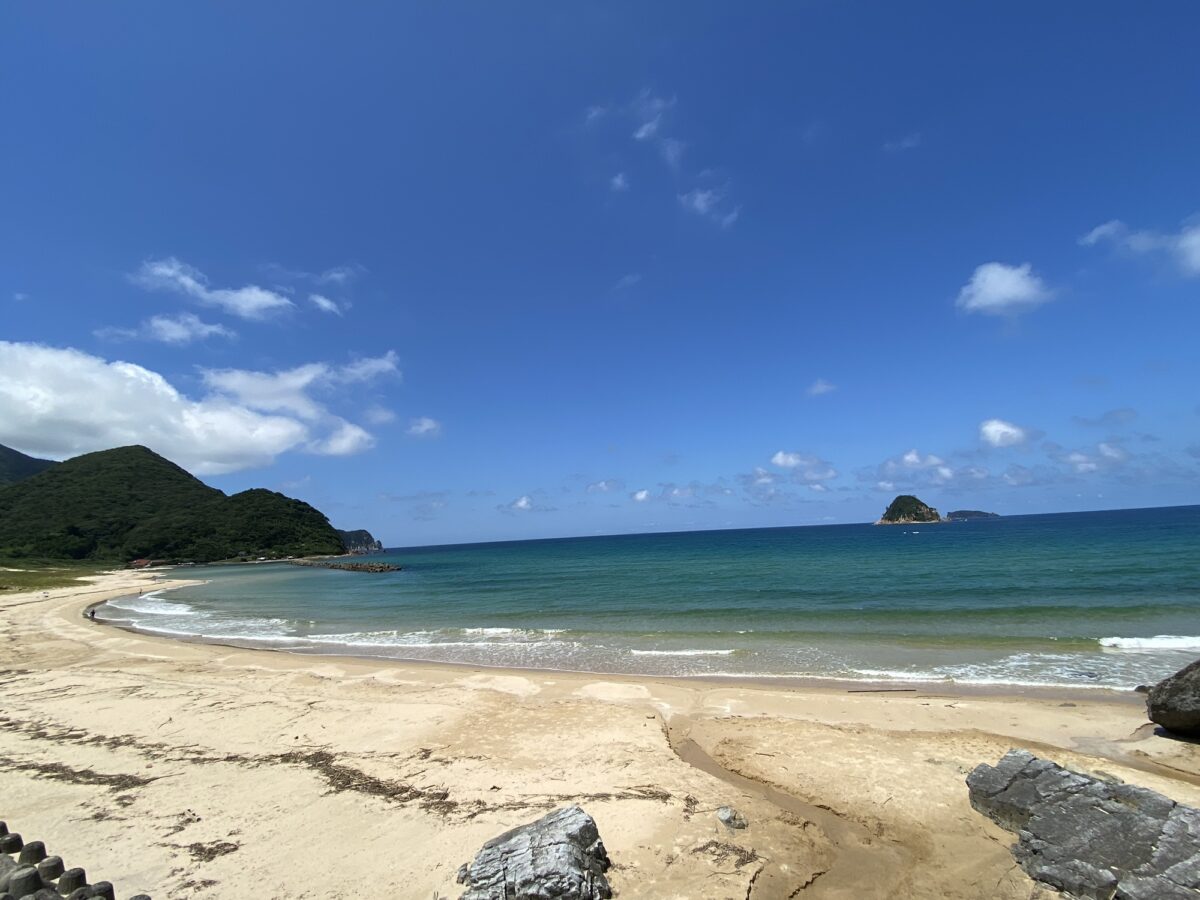
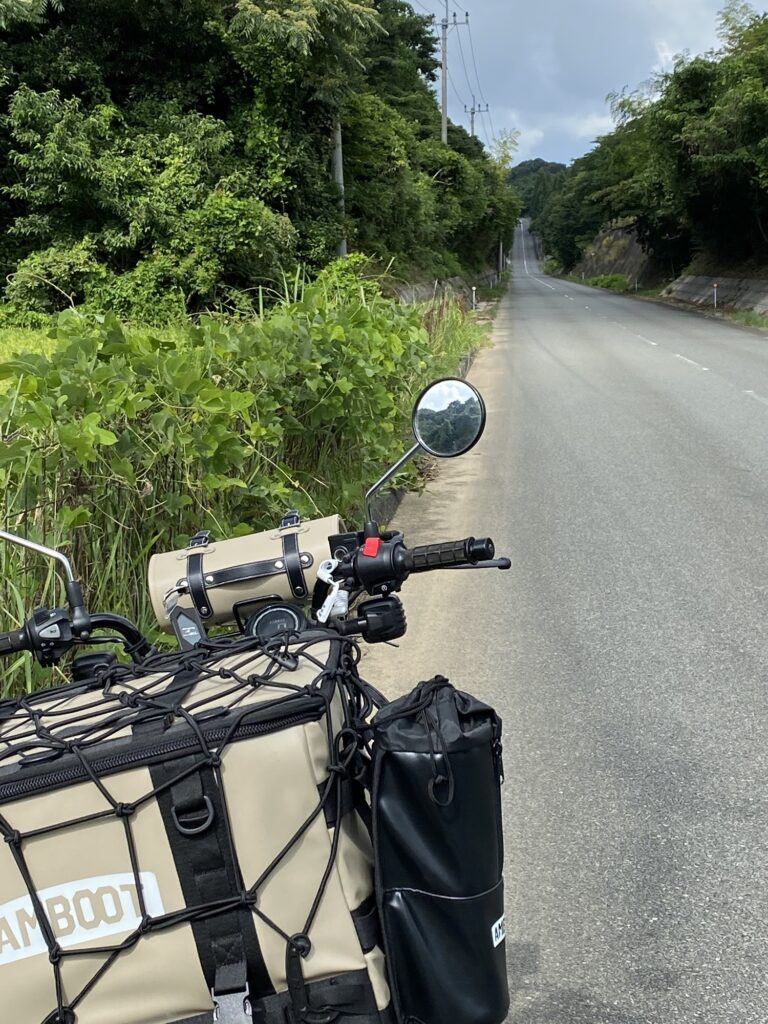
I stayed at Yumoto Onsen yesterday. On the way from Yumoto Onsen to Tsunoshima Ohashi (Tsunoshima Bridge), I discovered a straight stretching out road —what they call a “super farm road.”
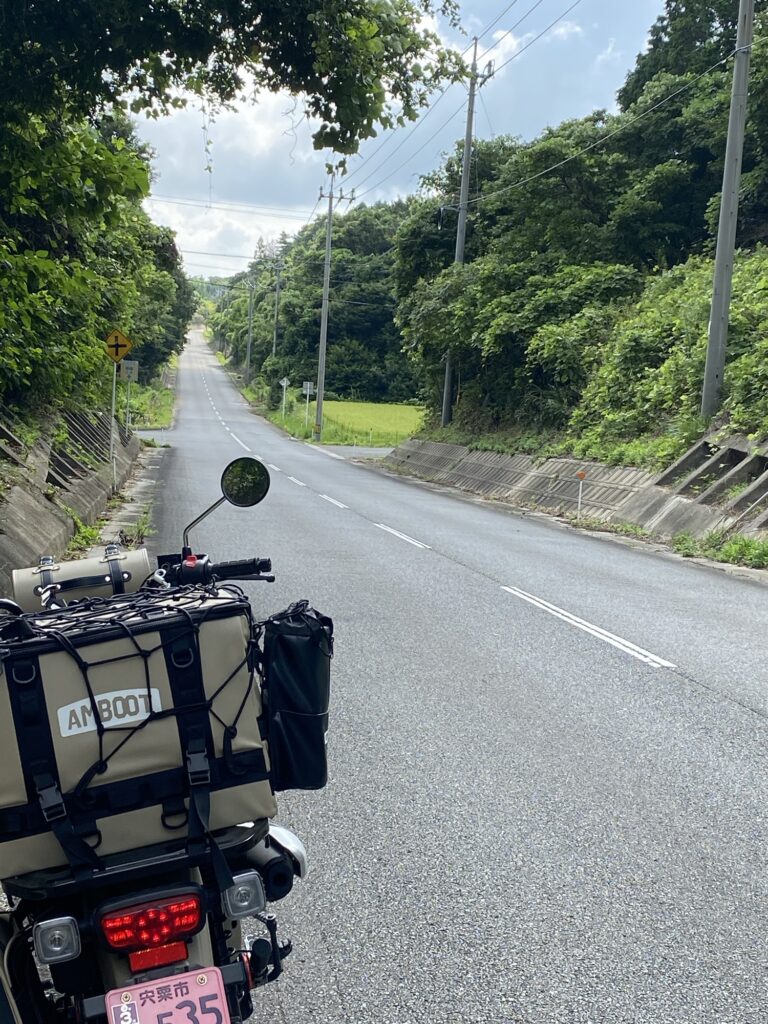
Without thinking, I turn back just to take a picture. The scenery was so beautiful, I almost mistook it for Hokkaido.
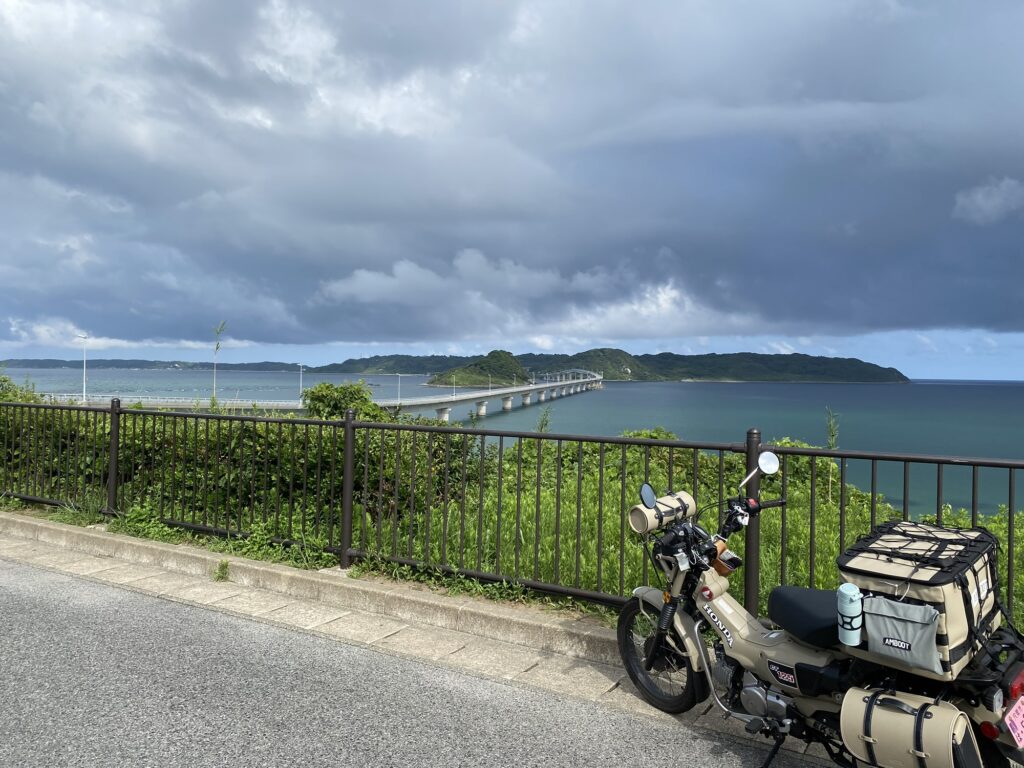
Oh! The Tsunoshima Ohashi is coming into view!
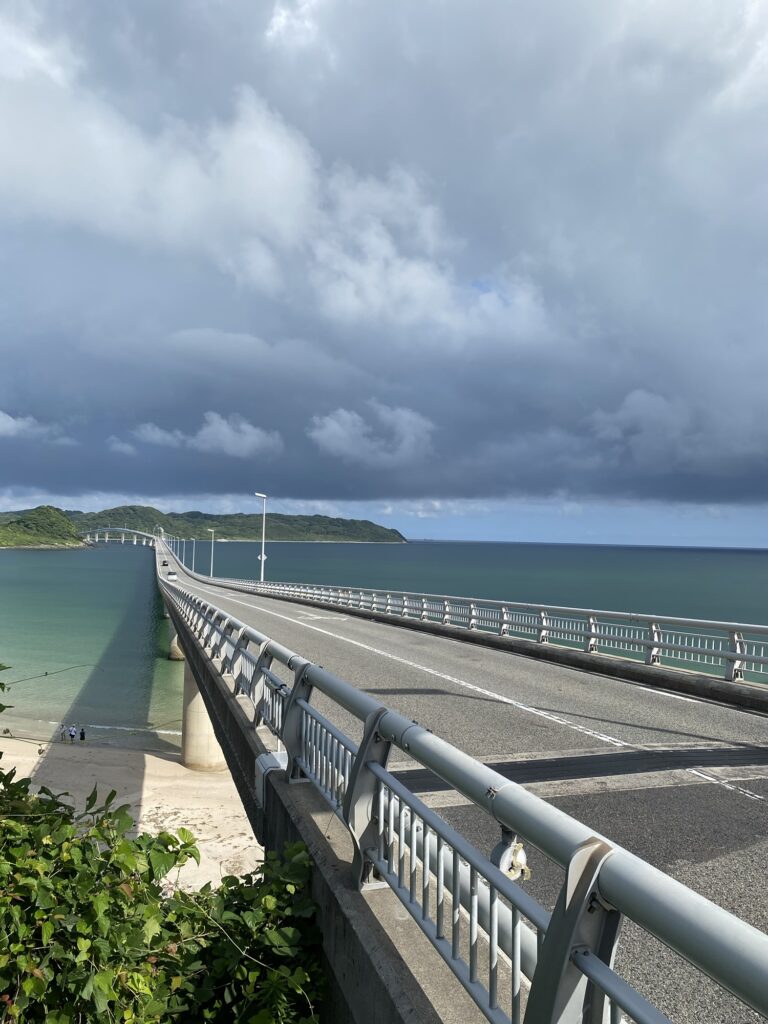
Just crossing here makes me happy. The cobalt blue sea is truly beautiful!
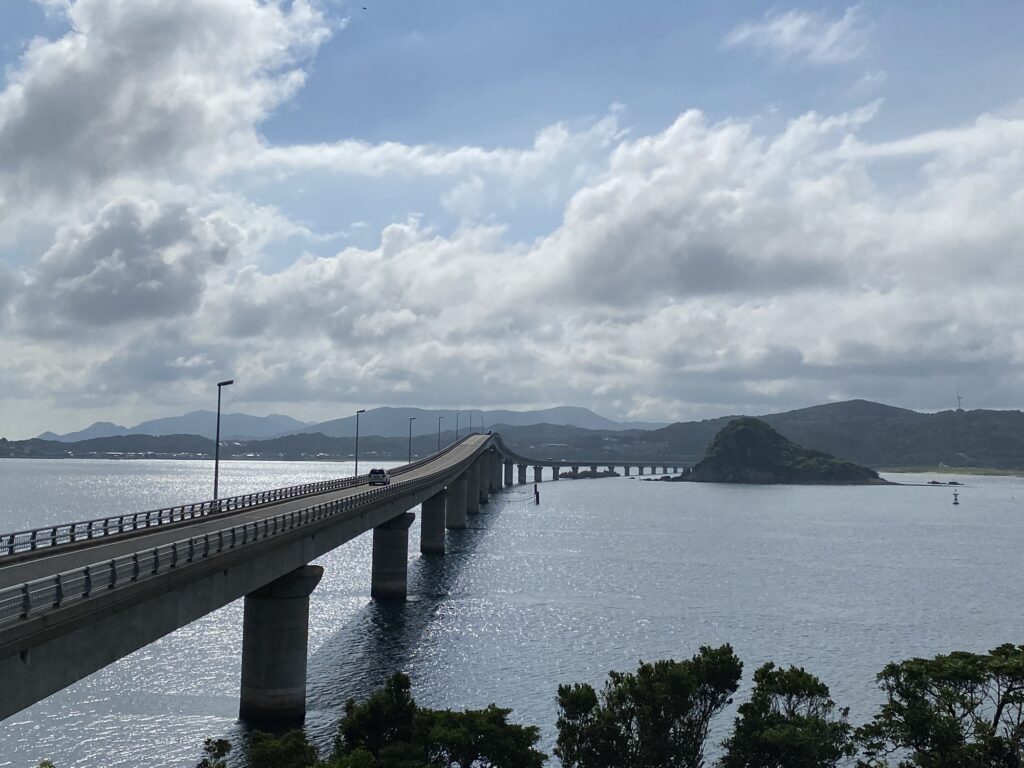
Photo taken from the Tsunoshima side.
The beautiful sea doesn’t show up well because of the glare. So upsetting!
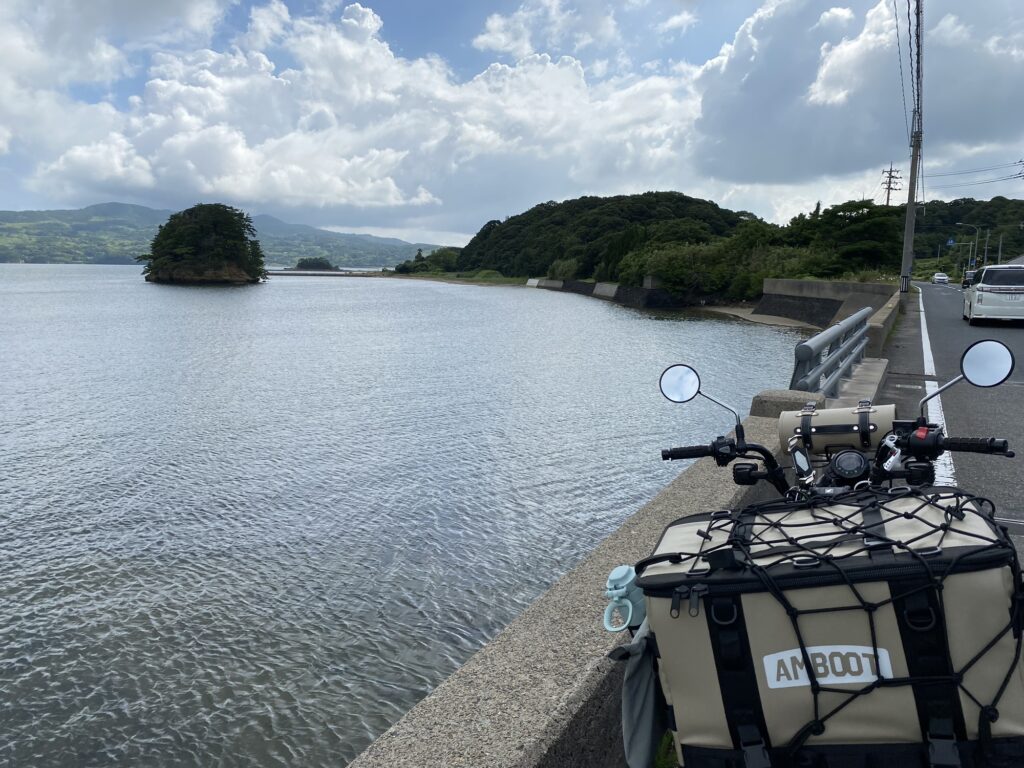
I plan to turn back from Tsunoshima.
Now then, there should be a shrine called “Motonosumi Shrine” nearby with lots of torii gates!
Let’s go check it out!
Motonosumi Shrine is a breathtaking shrine that was selected by CNN Travel as one of the “31 Most Beautiful Places in Japan.”
The shrine’s remarkable location makes for a striking contrast between 123 red torii gates lined up facing the sea and the cobalt blue of the waves below.
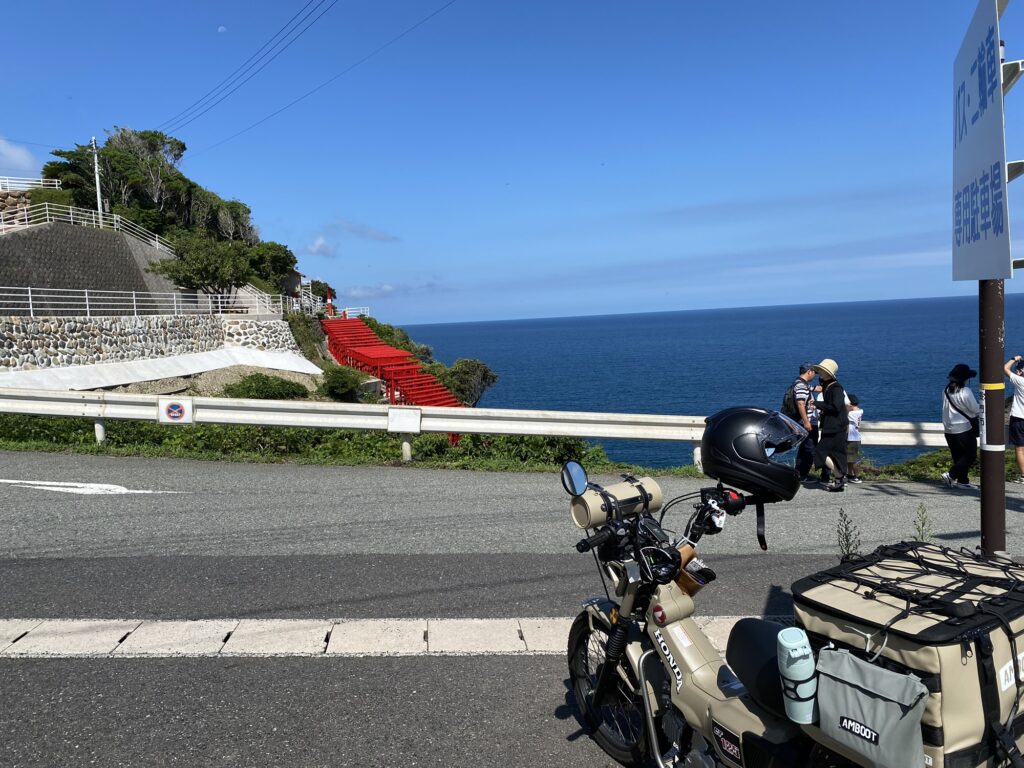
Ooh!
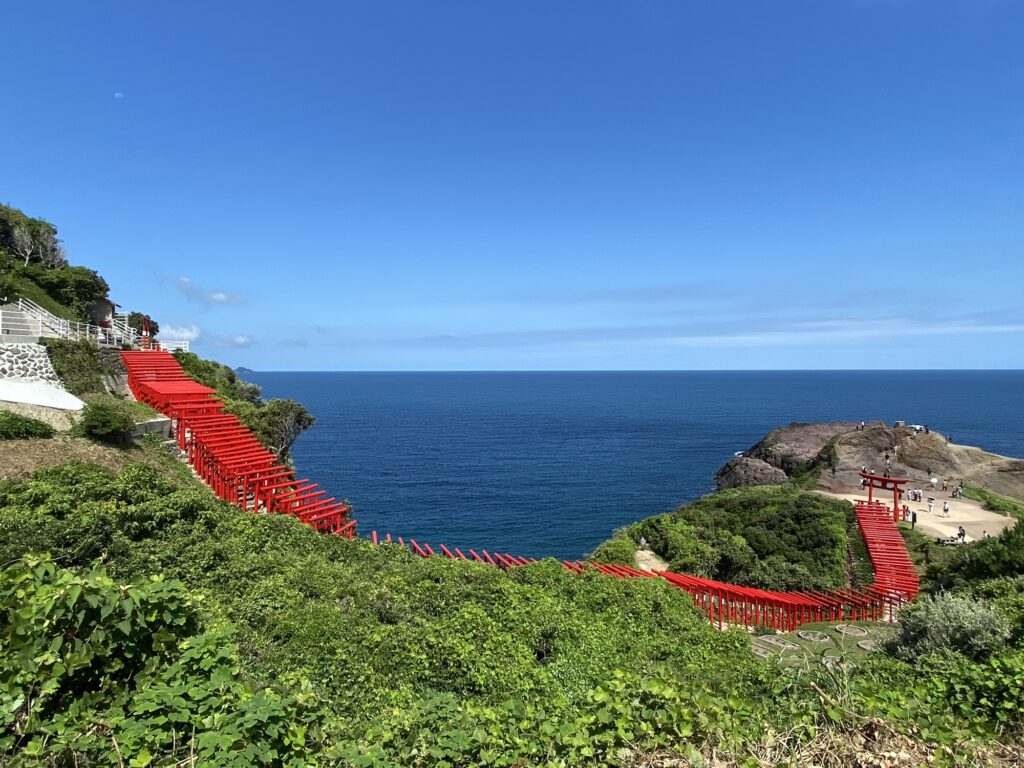
It was worth coming here! What a magnificent view! The weather is clearing up!
I absolutely must visit Hagi City, known as the foundation of the Meiji Restoration!
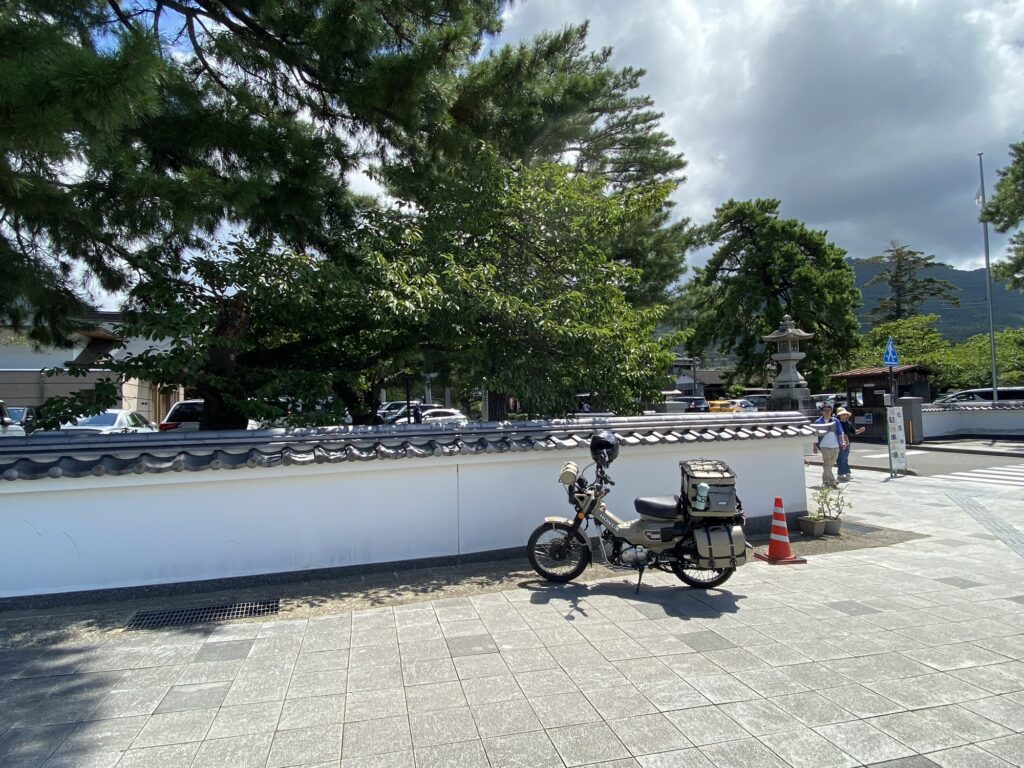
Once again, the kind parking attendant told me, “You can park by the white wall next to the pylon.”
Of course, it’s free.
I visited Shoin Shrine. Within the shrine grounds are sites such as the Shoukasonjuku Academy (a place of self- learning), which and many talented graduates who played important roles in the industrialization of Japan studied at this academy.
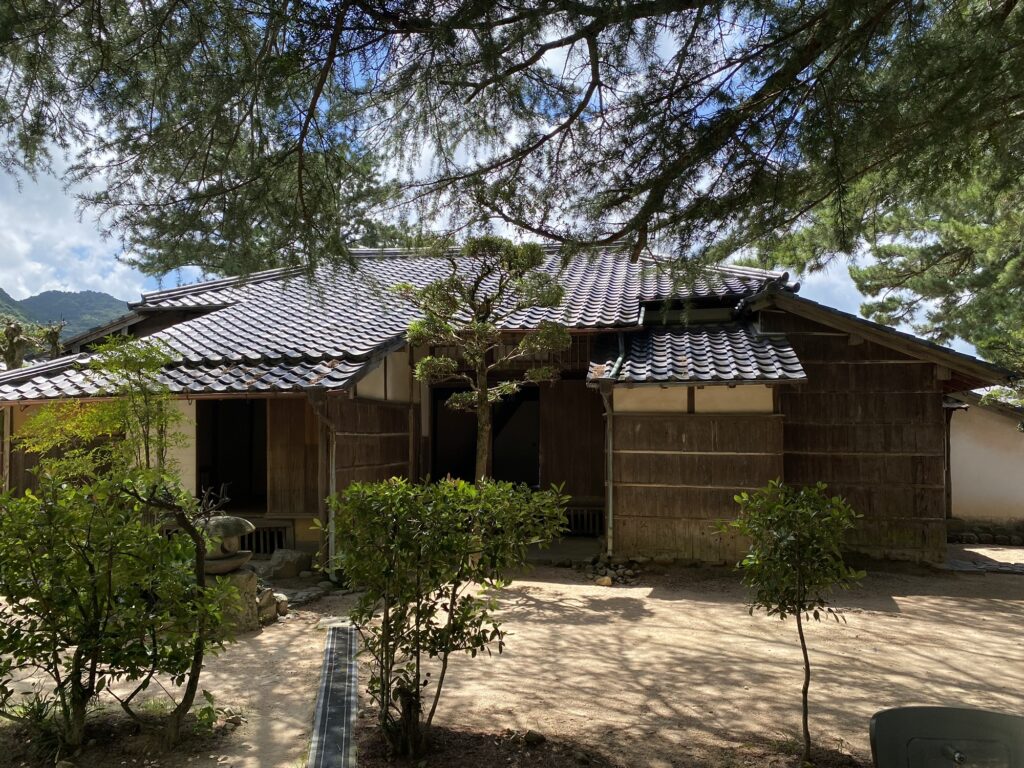
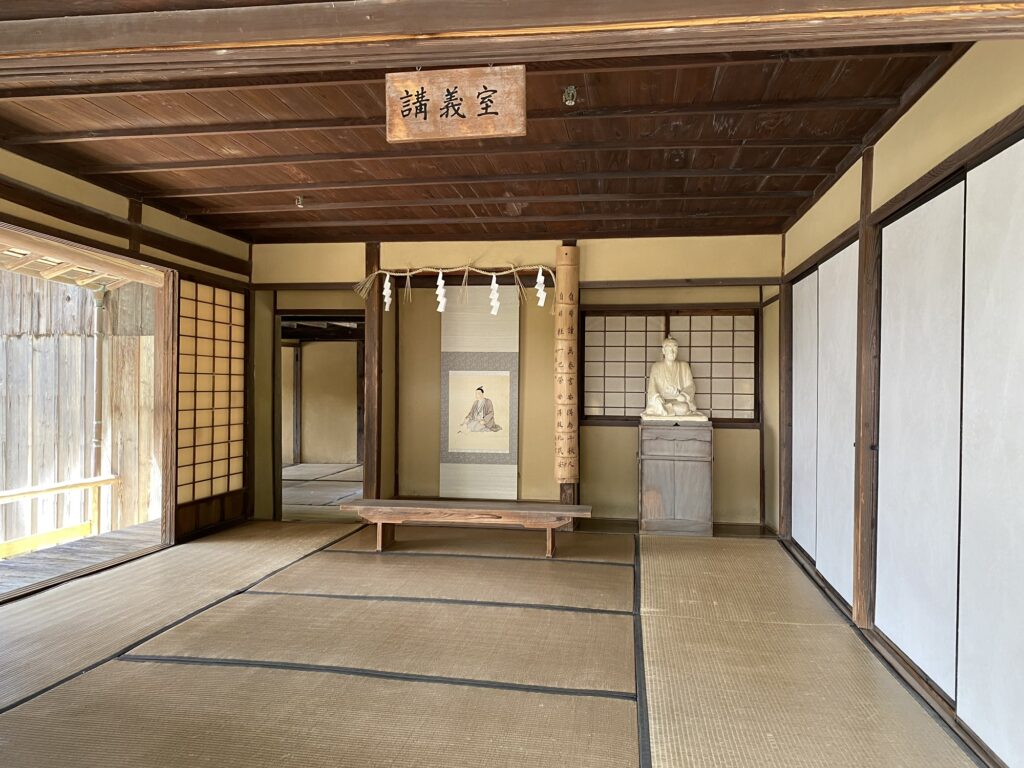
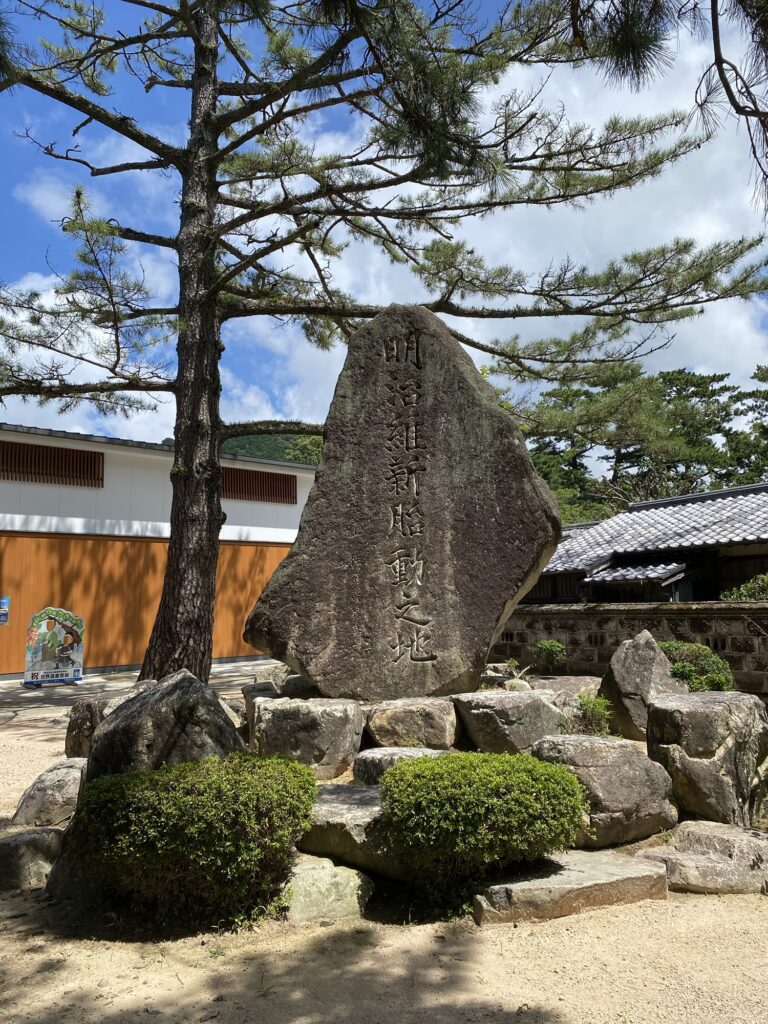
This is the private school where great figures who accomplished the Meiji Restoration, such as Itō Hirobumi and Takasugi Shinsaku I like, studied.
How much has education that doesn’t fit the molds, that doesn’t force people the molds, been able to cultivate talent? Awesome!
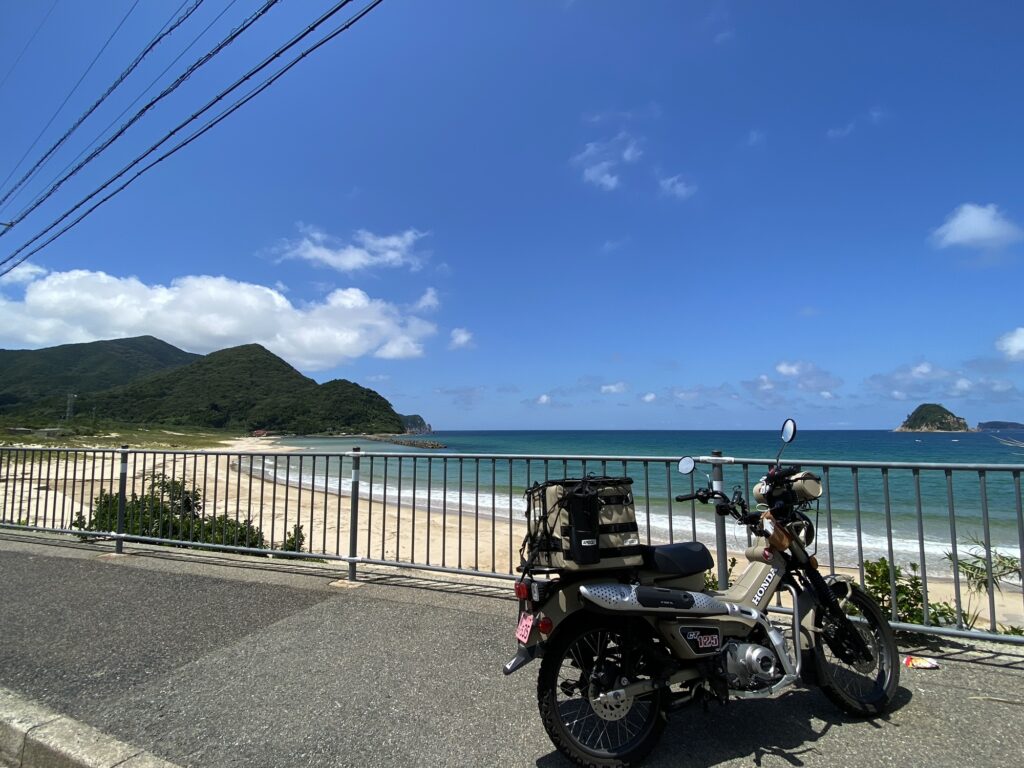
This is Hagi’s coastline. The Sea of Japan is crystal clear! I’m amazed!
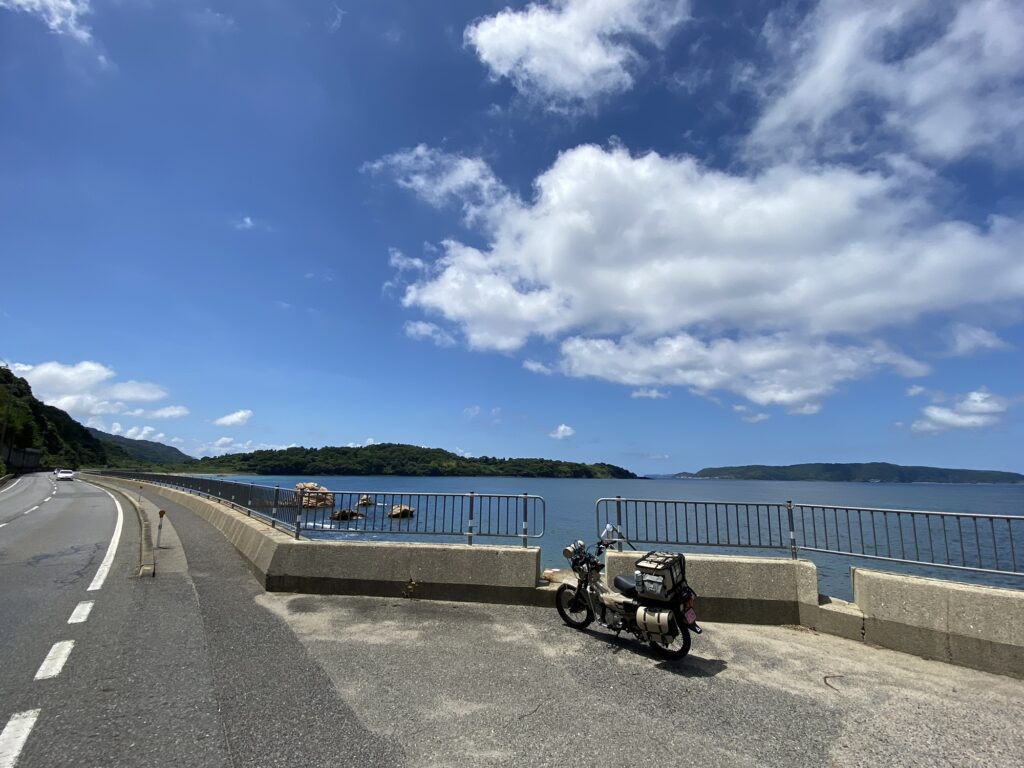
I’m enchanted by the color of the sea.
Listening to the sound of the waves lets me forget the daily hustle and bustle even for a moment.
Perfect for resetting my brain!
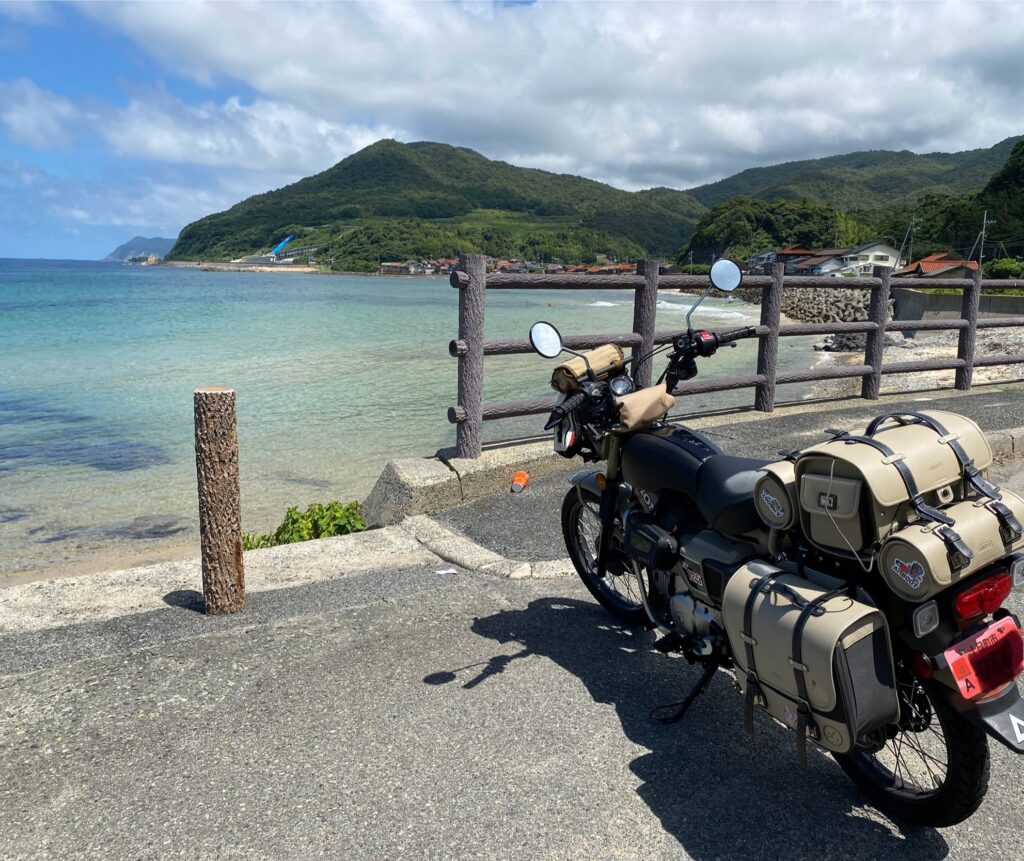
I encountered a young person using AMBOOT (manufactured and sold by Okubo Manufacturing) on the coast of Abu Town.
I couldn’t help but expressed my gratitude.
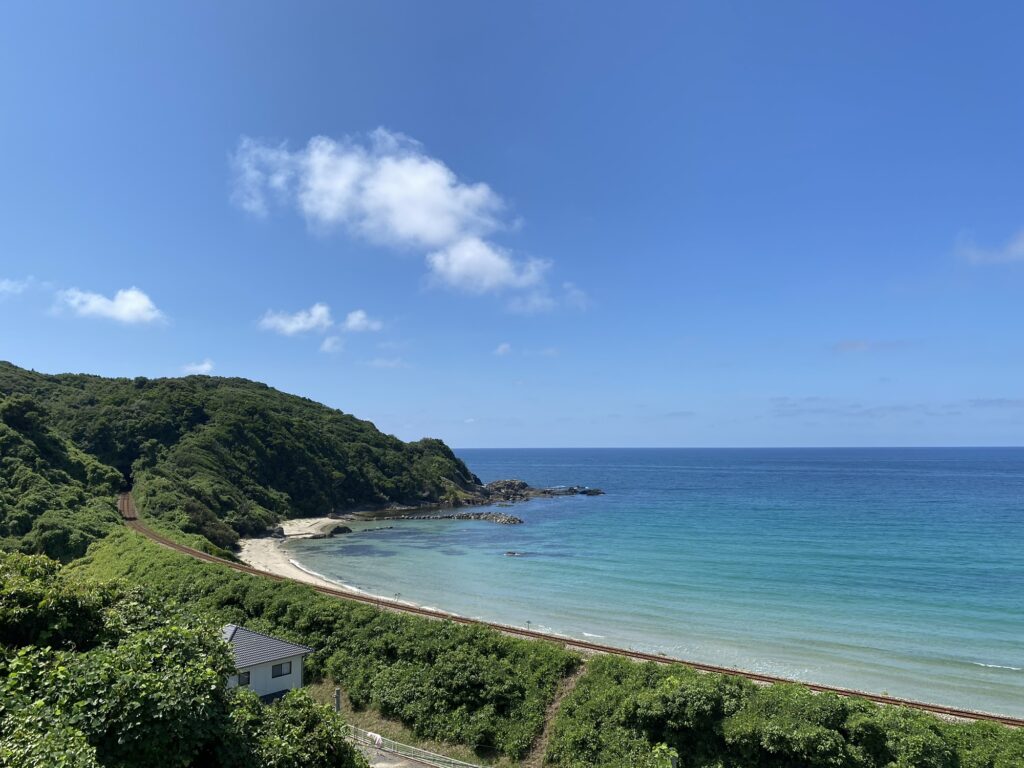
Behind the building at Roadside Station Yūhi Park Misumi, the sea stretches out crystal clear!
Seeing someone with a camera ready, I asked the silly question, “What are you waiting for?”
After watching for a while, I saw the train. It really came!
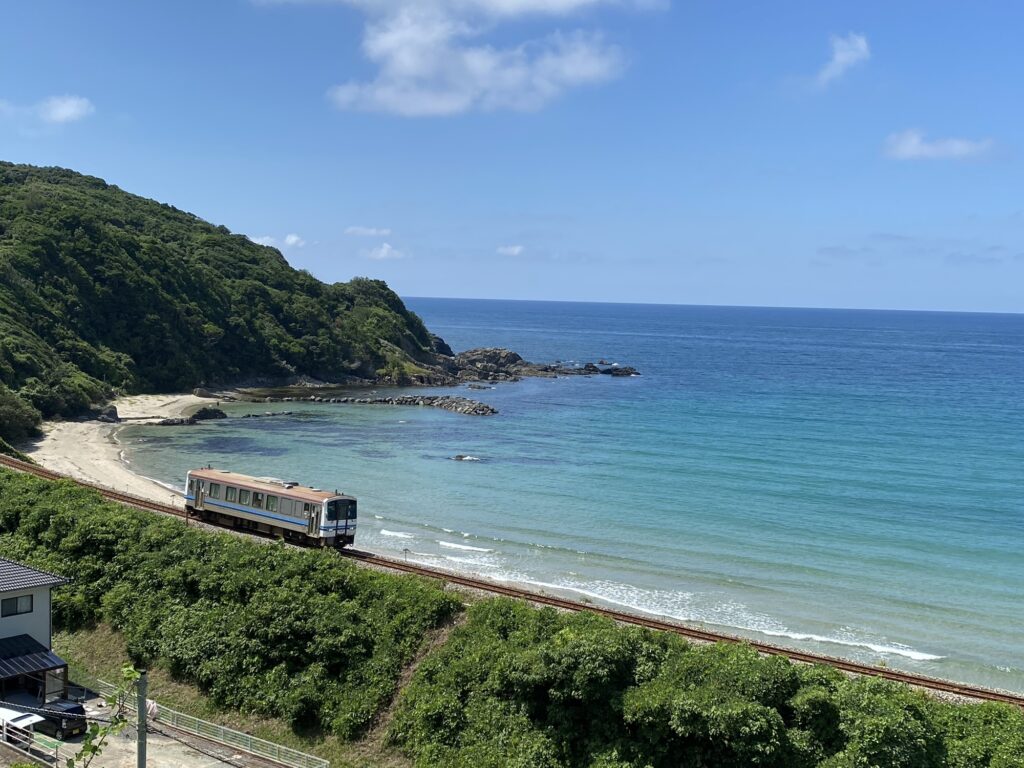
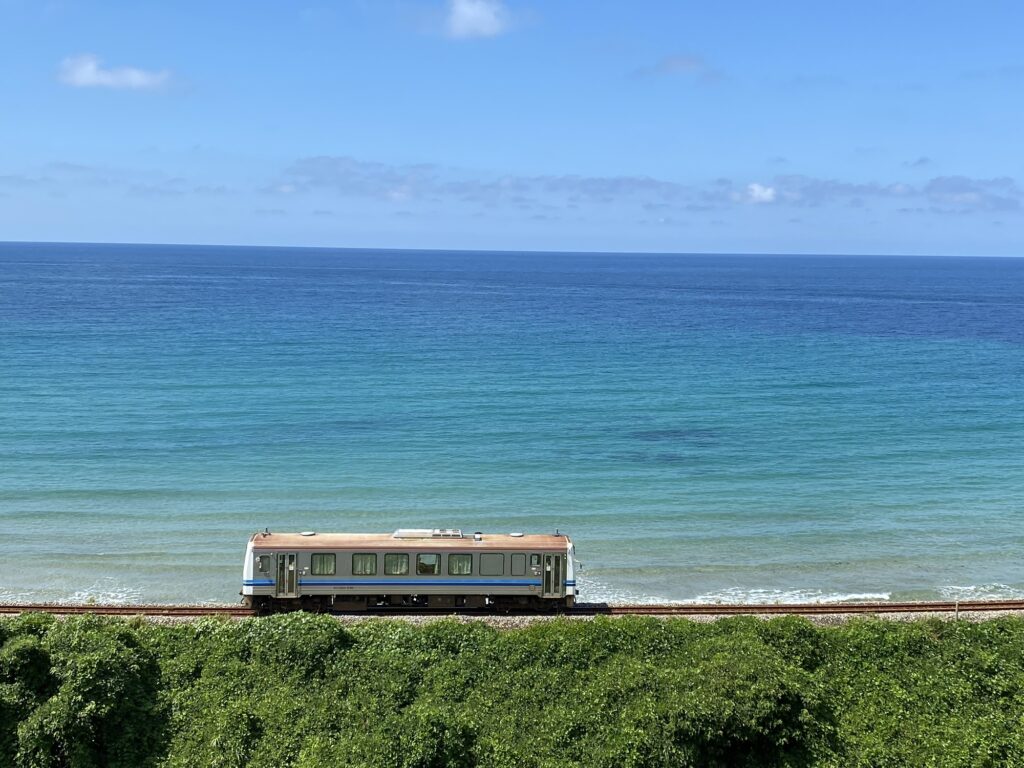
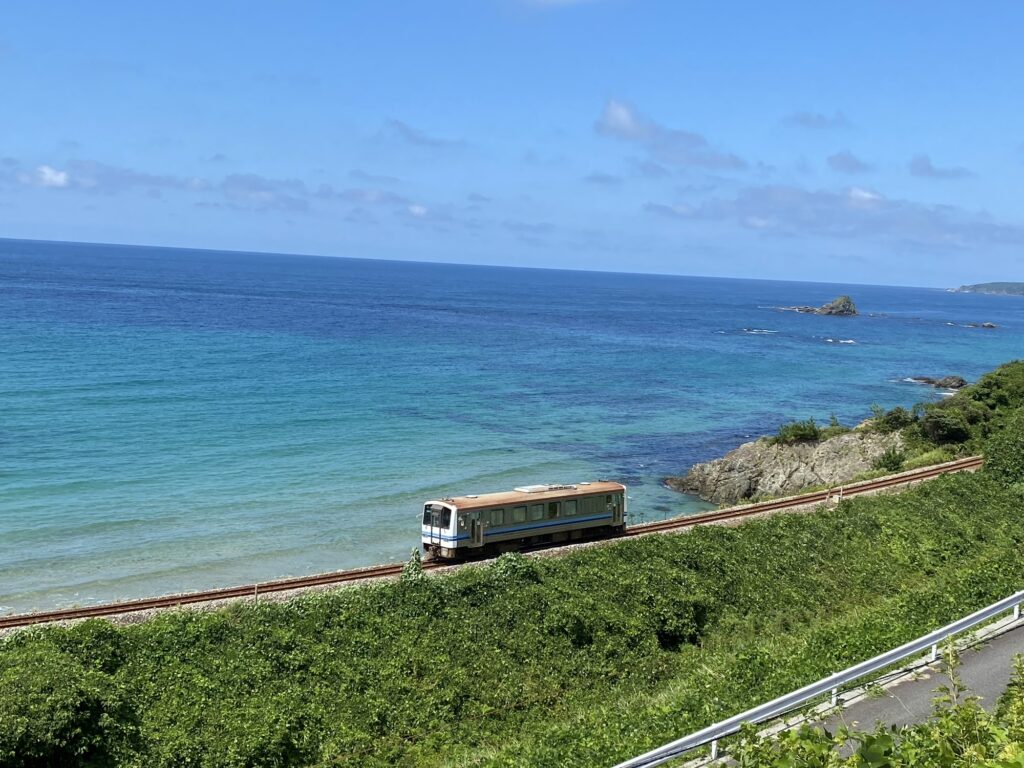
By chance, but truly lucky.
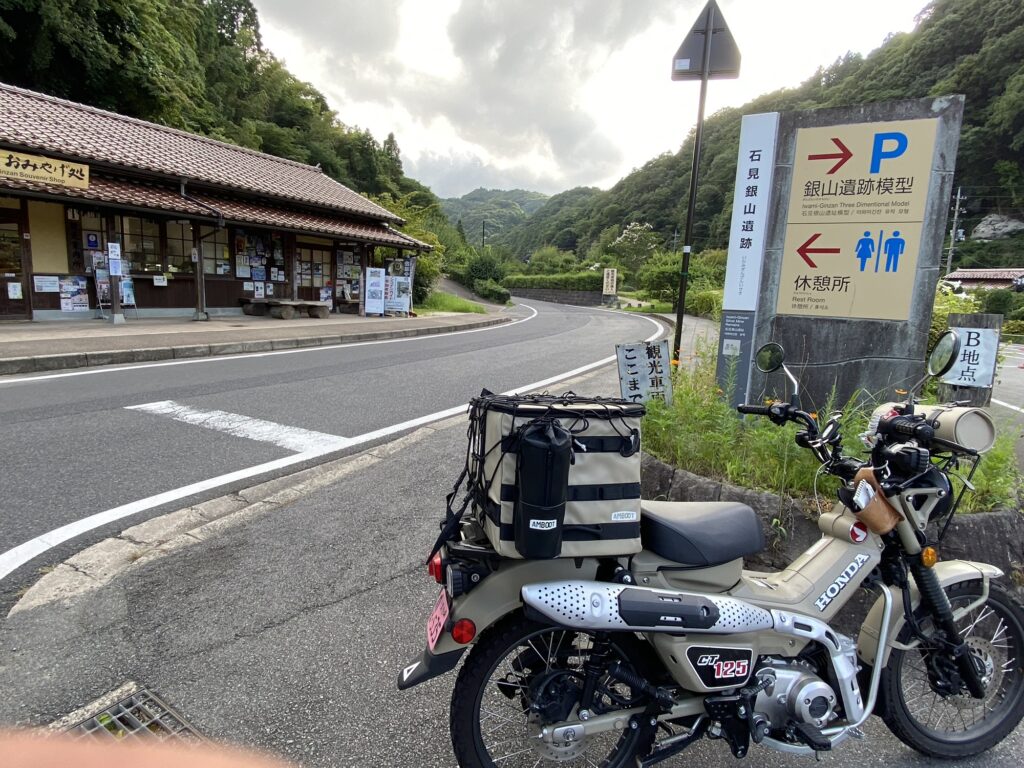
I stopped by Iwami Ginzan. Then I headed toward Okuizumo, the heart of tatara system. The Iwami Ginzan was an underground and the largest silver mine in Japanese history. It was active for almost four hundred years, from its discovery in 1526 to its closing in 1923.
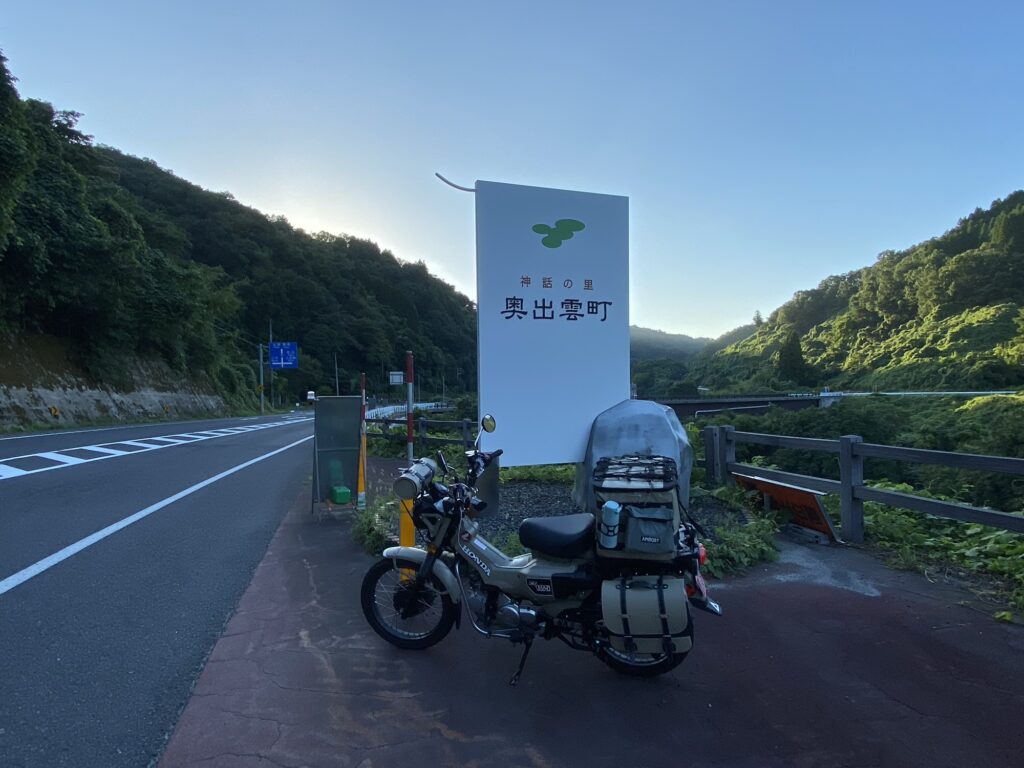
I arrived at Okuizumo, the sacred place of tamahagane steel, as the sun was setting. There’s a place I always make sure to visit when I come here.
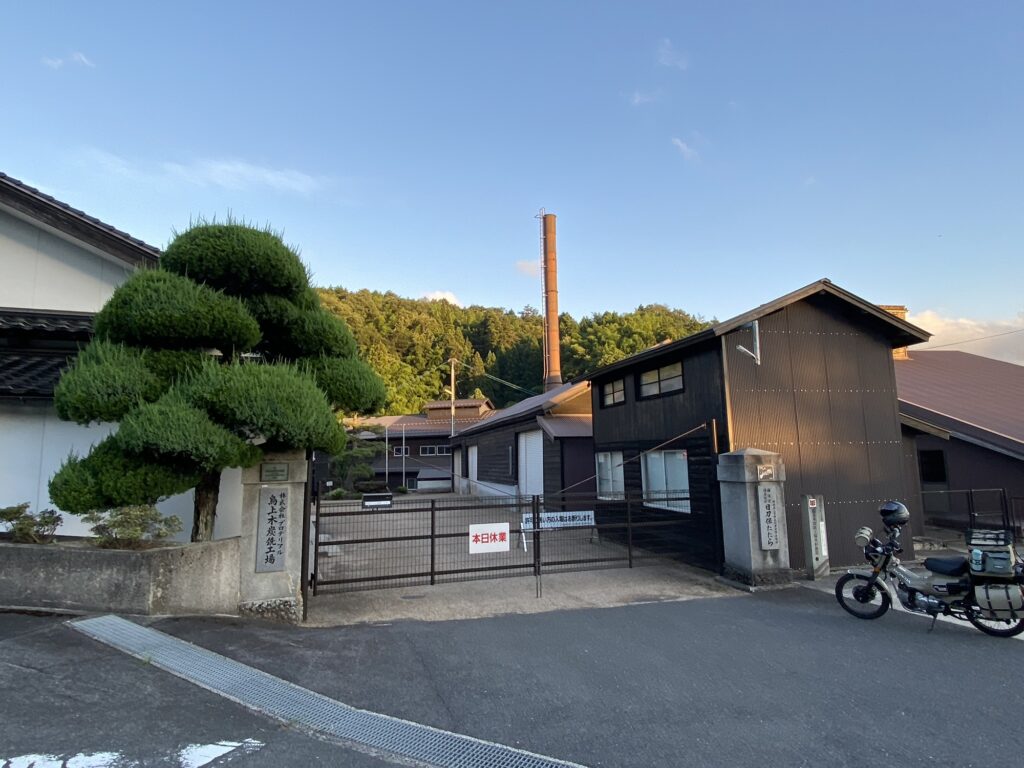
Former Hitachi Metals, Ltd is the sole factory producing tamahagane, the essential steel for Japanese swords. It is the source of Japanese swords, made only through tatara system using modern technology.
That’s all for today. Total distance traveled: 420 km. I will return to the office tomorrow. Final day.